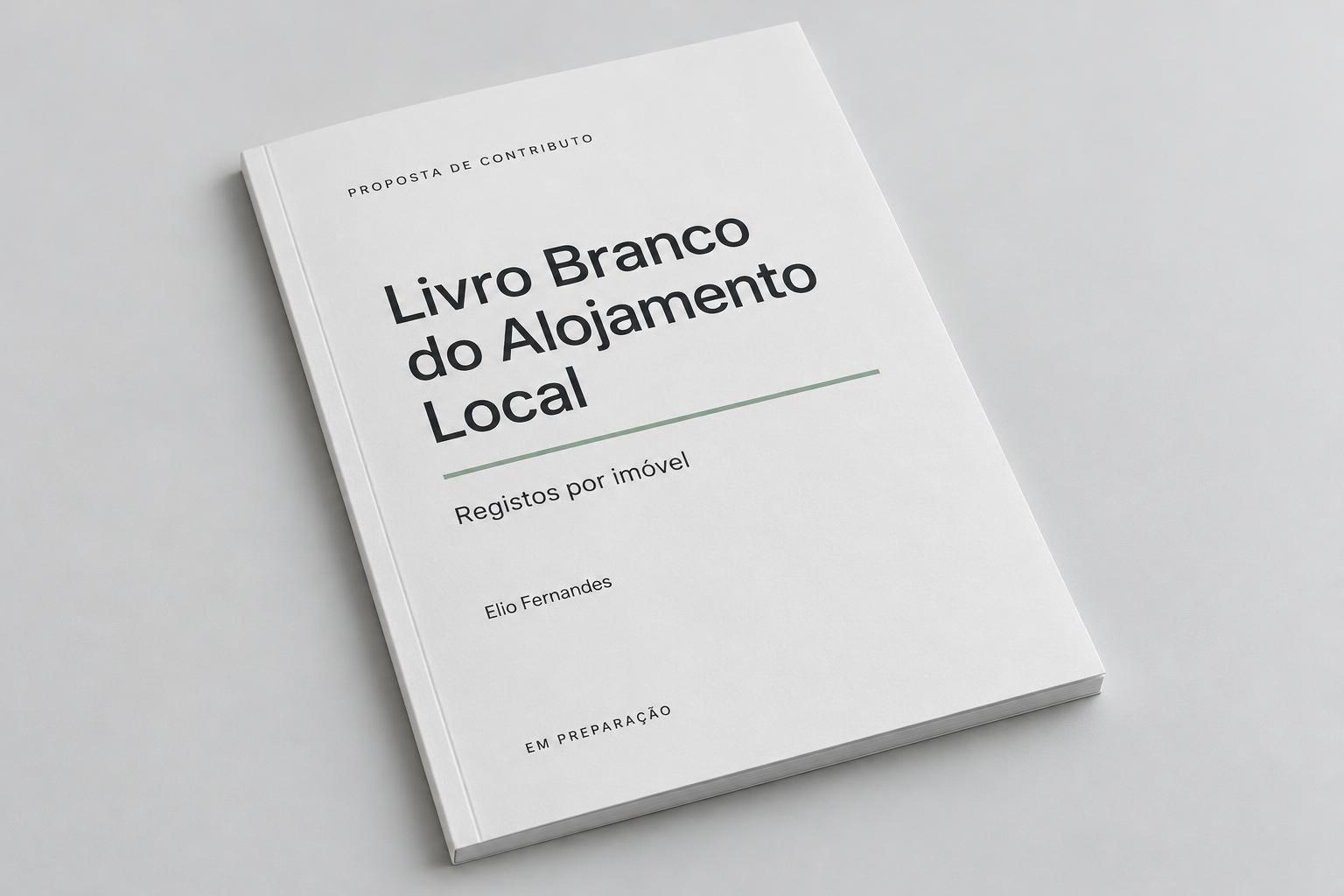
Cover: AI-generated mockup illustrating the contribution I'm preparing. It is not the White Paper's official cover and does not imply an accepted collaboration.
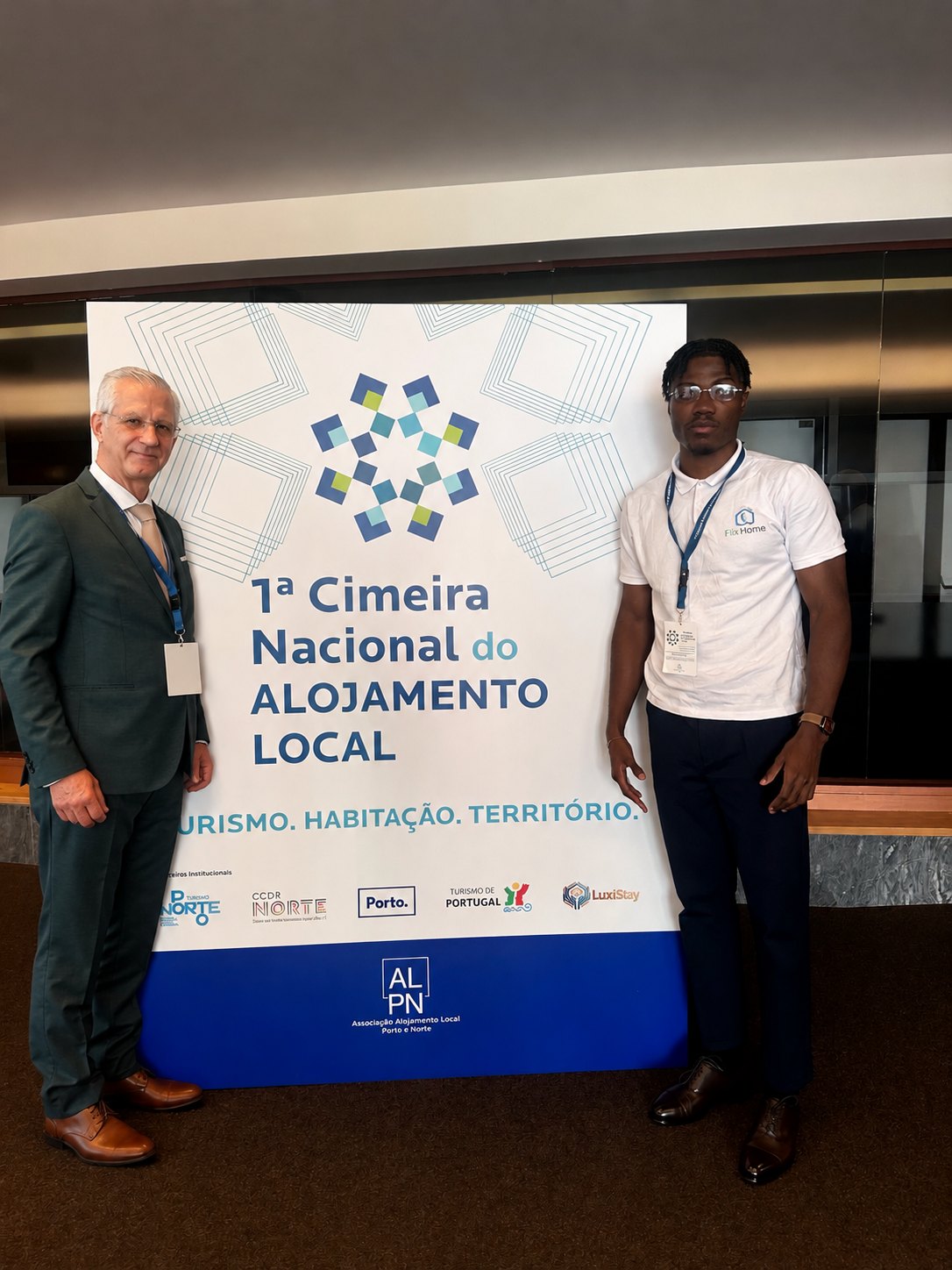
On 7 October, I went to the first National Short-Term Rental Summit in Porto to listen. In my article about that day, I shared the question I brought home: if the sector needs knowledge to make better decisions, where does the data come from?
That question didn't stay in the room. In the conversations I've been having with managers and owners, another one comes up, closer to the daily work: where is the information about each property?
I've met with several managers and owners. I've heard accounts of information scattered across messages, spreadsheets and the memories of people on the team. Some remain unhappy with the experience of the software they use. Having software doesn't, by itself, mean being able to find a property's history when you need it.
These conversations don't allow me to speak for the whole sector. But they are enough to take the problem seriously and keep working on it.
What happens when the history is missing
A fault comes back. You need to find out what was done last time, who carried out the repair and whether any evidence was kept. The answer might be in an old conversation, an invoice or the memory of someone who no longer works with the team.
Before a new guest arrives, another problem comes up. Who is following it through? Was the owner told? Is it resolved, or is there just a message saying someone would deal with it?
When you need to explain a cost, hand work over to someone else or find a documented check, the search starts again.
These are illustrative examples of the kinds of situations we want to understand. They are not transcripts of testimonials or individual cases I'm presenting as documented.
The problem isn't just storing information. It's being able to find it, understand whether it's up to date and know what still needs doing.
AI-generated image. Illustrative scenarios, not real testimonials. Captions are in Portuguese.
Why the White Paper matters here
ALPN is preparing Portugal's first Short-Term Rental White Paper. According to the Lusa report published by ECO, Manuel Caldeira Cabral agreed to coordinate the work. Contributions were to be collected until the end of 2026, with publication expected by May 2027.
It is a work in progress, not a final document. The announced schedule shouldn't be mistaken for a guarantee of publication on that date either.
The sector-wide discussion and managing a property operate at different scales. I don't want to confuse them. A set of maintenance records doesn't measure short-term rentals in Portugal or, on its own, answer questions about tourism, housing and territory.
But I believe it's worth understanding how we can document the management of each property better. That is the specific area in which I'm preparing a proposed contribution.
Four things I propose recording
1. Reported problems and what happened to them.
Which property the problem occurred in, when it was reported, who took responsibility and when it was marked as resolved. We also need to define what “resolved” means and what evidence is kept. A received message is not an officially verified complaint and shouldn't be presented as one.
2. Work carried out.
What was done, when, by whom and what record exists of the condition before and after. When documentation is available, costs also help explain the work. A repair doesn't become a rehabilitation project simply because we recorded it.
3. The service providers involved.
Who carried out the work and which municipality they are based in, according to a defined criterion. This can describe the distribution of contracted services. It is not enough, on its own, to measure the economic value retained locally.
4. Documented safety checks.
Which check was recorded, on what date, by whom and with what evidence. Keeping a record doesn't prove safety or legal compliance. It doesn't replace inspections, certification or the work of qualified professionals.
There is one essential precaution across all these measures: a missing record doesn't mean nothing happened. It means we don't have that information.
What I want to learn from the pilots
The first Flix Home pilots with managers start in November 2026. They haven't started yet, and I have no results to present.
I want to understand what a team can keep up to date in its daily work, what adds too much effort and which information actually helps people decide. If recording a piece of work takes so much effort that nobody does it, we need to know that too.
This is the work we're building Flix Home for: giving managers control and visibility over their portfolio. What's in each property, what was done, when and by whom.
The aim is to complement booking software, not assume a technical integration that hasn't been confirmed or replace the people doing the work on the ground.
What we could share, and what we wouldn't
Through the pilots, the proposal is to prepare a practical note on the definitions used, the records we were able to maintain and the difficulties encountered.
Any sharing would need to be authorised and aggregated, without identifying managers, owners, properties or service providers. Small groups or combinations that could allow someone to be recognised would need to be grouped together or excluded.
We would also need to say how many properties were covered, how they were chosen, for how long and where records were missing. Those pilot results wouldn't represent the country.
This proposal doesn't replace official statistics or aim to fulfil the data collection and sharing obligations of Regulation (EU) 2024/1028, applicable since 20 May 2026.
It is still a proposal
I haven't yet sent the contribution to the White Paper's coordination team. I'm preparing it. There is no accepted collaboration, confirmed inclusion or commitment from ALPN to Flix Home.
What I want to bring is a question with a concrete way to work on it: can we document what happens in each property better, without adding another complicated system to a manager's day?
I don't want to promise the answer before working with the people who face the problem. I want to listen, test and share what we learn, including what doesn't work.
If you manage short-term rentals and recognise these difficulties, I'd like to speak with you. If you'd like to follow this work, you can subscribe to the newsletter.
Sources and context
- idealista: announcement of the summit and preparation of the White Paper for 2027.
- The summit's White Paper page.
- The Lusa report cited in the article was also published by SAPO and idealista. These are republications of the same report, not three independent confirmations of the operational problems described here.