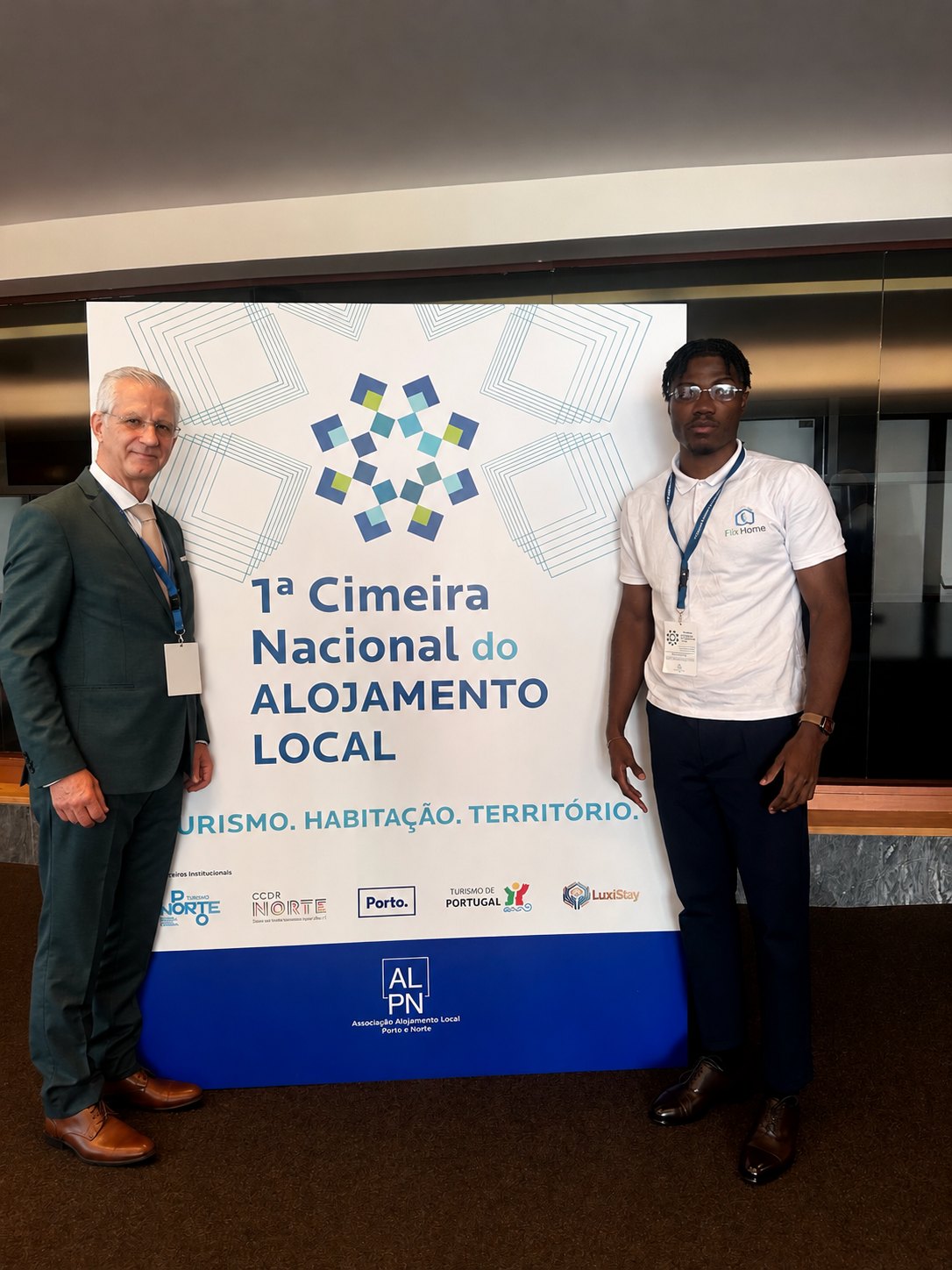
On 7 October, I attended the first day of the first National Short-Term Rental Summit, organised by ALPN at Batalha Centro de Cinema in Porto. The event ran for two days, with more than 40 speakers, around 200 participants and six panels.
I went to listen. I'm building a product for people who manage short-term rentals, and I want to understand the sector through the people who study it, regulate it, represent it and work in it every day.
The sentence that opened the day
At the opening session, the president of CCDR NORTE, Álvaro Santos, said something that stayed with me for the rest of the day: "Short-term rentals are part of the equation, but they are not the whole equation."
He also reminded us that "Portugal does not have a single housing market, a single tourism reality or a single kind of territory." He named three conditions for good policy: knowledge, stability and recognising differences between places.
Those three ideas help me make sense of what I heard throughout the day.
1. Cities and people: short-term rentals can't be discussed in isolation
The first panel asked: "From urban regeneration to the housing crisis: how did we get here?" Short-term rentals helped restore buildings and historic centres. Today, the same activity is at the centre of the debate about access to housing. Both are part of the same story, and neither can be addressed by ignoring the other.
2. Places: not everywhere is Lisbon or Porto
"There are places where we will need to manage pressures. And there are others where we need the opposite: to create activity, restore homes, attract investment and bring people in," Álvaro Santos said. The panel on territory and sustainability continued along these lines. In sparsely populated areas, short-term rentals can help people stay, restore heritage buildings and support the local economy.
Patrícia Araújo, CEO of Biosphere Portugal, challenged the room to create more solutions, work more closely together and think about an experience that goes beyond a bed.
3. Stability: Europe is changing the rules
The European panel discussed new short-term rental regulation, the use of data and proportionate responses to very different places. A street in central Porto is not a village in the interior, and the rules need to recognise that difference. Managers need to know what they can count on.
4. Knowledge: separating cause from perception
Of the three conditions, this one stayed with me the most. The panel on tourism and housing called for a distinction between causation, correlation and perception, and for useful indicators to inform public policy. Ana Jacinto, secretary-general of AHRESP, spoke about the need for an integrated information system to track short-term rentals nationally.
When the subject affects rents, families and neighbourhoods, making decisions based on perceptions is risky. The debate deserves evidence, not slogans.
5. The White Paper is being written with the sector
ALPN presented the working draft of the Short-Term Rental White Paper. It will continue to receive contributions until publication, planned for 2027. CCDR NORTE has already said it wants to take part.
The question I brought home
If the sector needs knowledge to make better decisions, where does the data come from?
What I heard in the corridors
Between panels, I spoke with short-term rental managers. They confirmed what we've been hearing for five months. Information about running properties and maintaining their equipment is still scattered across WhatsApp, spreadsheets, separate messages and the memories of people on the team.
This isn't new. What worries me is that every new property, every new rule and every additional guest adds information. The volume keeps growing, but the way it is managed stays the same. This won't sort itself out.
Where the bigger and smaller conversations meet
In the room, the sector asked for indicators to make better decisions. In the corridors, managers said they don't always know the history of their own property: what's there, what was done, when and by whom.
The scale is different, but the need is the same. Without reliable information about each property, it's hard to make good decisions, whether you're managing a portfolio or taking part in the public debate.
There's also a social dimension I don't want to lose sight of. A well-kept home lasts longer, is safer for those who stay there and remains a home, whether it's used as a short-term rental today or returns to the housing market tomorrow.
What I still want to understand
I don't know whether information about individual properties could one day help build indicators for the sector, or how that could happen without exposing anyone's data. I also want to understand better how managers bring this information together today and what would genuinely help them. That's why I want to keep listening.
Why we're here
This is why we're building Flix Home: to give short-term rental managers control and visibility over their portfolio. What's in each property, what was done, when and by whom, all in one place.
Organising property information isn't a new idea. It already exists in other markets and sectors. Our aim is to make it simple for people who manage the day-to-day work and don't have time for another complicated system.
We want to sit down with managers and work out together how to avoid the breakdown that keeps happening because nobody knew the history, the trip made just to check something a photo could have answered, the negative review caused by a problem that was already known, and the knowledge lost when someone leaves the team.
And, if it makes sense for ALPN, contribute to the White Paper what we see on the ground during the first pilots, including what doesn't work.
Thank you to ALPN for organising the event and to all the speakers. This text is about the first day. If you were there on the second, tell me what stayed with you.
I write about what I'm learning as I build. If you'd like to follow along, subscribe to the newsletter.
If you manage short-term rentals and recognise yourself in this, talk to me. Let's figure it out together.